 University of Agriculture and Forestry, Hue University
University of Agriculture and Forestry, Hue University
University of Agriculture and Forestry, Hue University
Workshop on “Native Forest Restoration: Initial Results and Future Prospects” at HUAF Connects Research, Practice, and Sustainable Development
With the aim of evaluating the initial outcomes of multi-species native forest restoration models based on natural forest regeneration principles, while discussing technical solutions, policy recommendations, and collaborative strategies for sustainable forest development toward 2030 with a vision to 2040, University of Agriculture and Forestry, Hue University (HUAF), co-organized the workshop “Native Forest Restoration: Initial Results and Future Prospects” on May 8, 2026.
The workshop was jointly organized by HUAF, the Vietnam Nature Conservation Center (TNV), the Hue Forest Owners for Sustainable Development Association (HUE-FOSDA), the Hue City Forest Protection Department, and the Phong Dien Nature Reserve Management Board. The program took place over two days, from May 7–8, 2026.
The workshop was attended by Assoc. Prof. Dr. Pham Ngoc Linh, Vice President of the Vietnam Union of Science and Technology Associations (VUSTA); Dr. Tran Lam Dong, Vice Director of the Vietnamese Academy of Forest Sciences; representatives of government agencies, forestry researchers, biodiversity conservation experts, and environmental professionals.
The workshop was attended by Assoc. Prof. Dr. Pham Ngoc Linh, Vice President of the Vietnam Union of Science and Technology Associations (VUSTA); Dr. Tran Lam Dong, Vice Director of the Vietnamese Academy of Forest Sciences; representatives of government agencies, forestry researchers, biodiversity conservation experts, and environmental professionals.
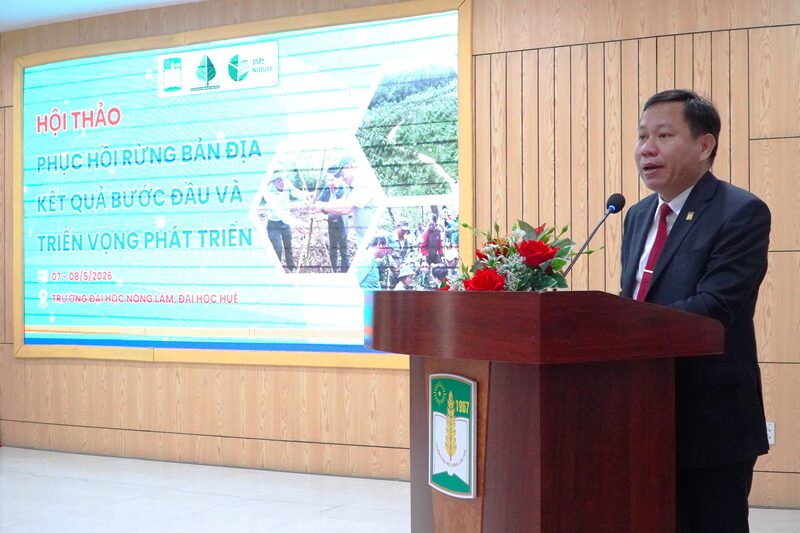
Assoc. Prof. Dr. Tran Thanh Duc, Rector of HUAF
Representing the organizing institutions were Assoc. Prof. Dr. Tran Thanh Duc, Rector of HUAF; Mr. Nguyen Huu Huy, Deputy Director of the Hue City Forest Protection Department; Mr. Tran Xuan Hai, Deputy Director of the Phong Dien Nature Reserve Management Board; Mr. Vo Van Du, President of HUE-FOSDA; Ms. Pham Tuan Anh, Director of the Vietnam Nature Conservation Center (TNV); together with numerous lecturers, researchers, staff members, graduate students, and undergraduate students interested in native forest ecosystem restoration.
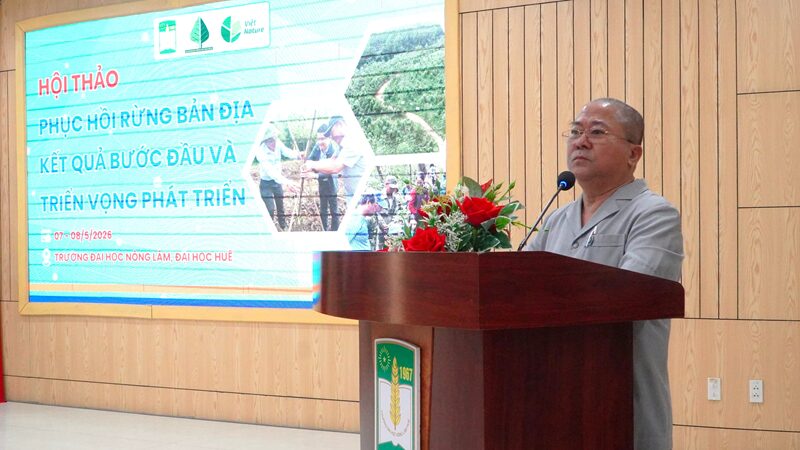
Mr. Vo Van Du, President of HUE-FOSDA
In his opening remarks, Mr. Vo Van Du, President of HUE-FOSDA, emphasized that restoring native forests not only contributes to biodiversity conservation but also plays a vital role in climate change adaptation, natural resource protection, and the sustainable development of local livelihoods. He stressed that stronger collaboration among research institutions, government agencies, conservation organizations, and forest owners would provide a solid foundation for expanding effective forest restoration models in the future.
In his welcome address, Assoc. Prof. Dr. Tran Thanh Duc, Rector of HUAF, reaffirmed the University's commitment to promoting research, education, and collaboration in forestry, nature conservation, and sustainable development. He highly appreciated the close cooperation among the co-organizing institutions and expressed his expectation that the workshop would create new opportunities for scientific collaboration, technology transfer, and human resource development to support native forest ecosystem restoration in Central Vietnam and across the country.
On May 7, participants conducted a field visit to the Khe Liem forest restoration site in Phong Dien Ward, where they observed restoration activities and exchanged professional experience. The field trip enabled participants to evaluate the initial effectiveness of the multi-species native forest restoration model based on the rainforestation approach and to share practical experiences in sustainable forest management and restoration.
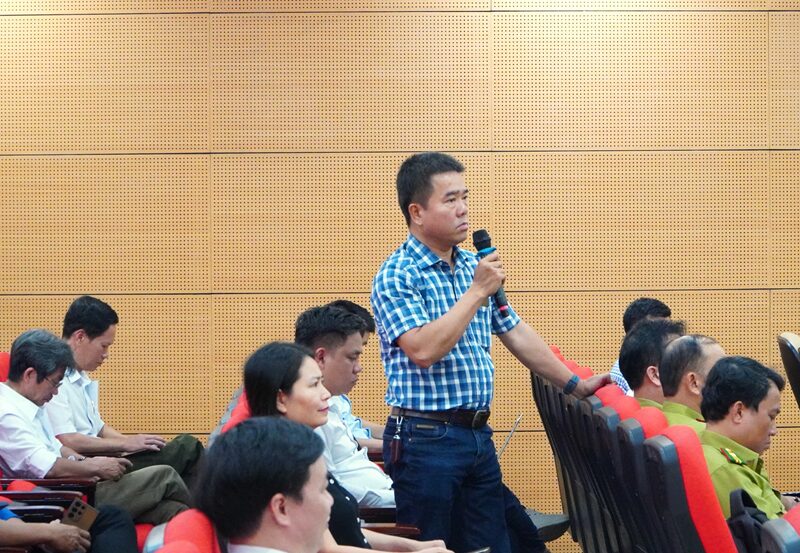
During the workshop on May 8, participants discussed a wide range of important topics, including the current status of native forest restoration, preliminary results from restoration models, challenges in forest conservation and management, and proposed solutions to improve restoration effectiveness while enhancing community livelihoods and strengthening climate resilience.
The workshop featured several valuable technical presentations, including the keynote report, the Khe Liem Restoration Model, and the A Luoi 1 Restoration Model. These presentations highlighted the significant potential for native forest restoration in Central Vietnam and underscored the importance of collaboration among universities, government agencies, conservation organizations, and local forest owners in advancing sustainable forestry.
In his welcome address, Assoc. Prof. Dr. Tran Thanh Duc, Rector of HUAF, reaffirmed the University's commitment to promoting research, education, and collaboration in forestry, nature conservation, and sustainable development. He highly appreciated the close cooperation among the co-organizing institutions and expressed his expectation that the workshop would create new opportunities for scientific collaboration, technology transfer, and human resource development to support native forest ecosystem restoration in Central Vietnam and across the country.
On May 7, participants conducted a field visit to the Khe Liem forest restoration site in Phong Dien Ward, where they observed restoration activities and exchanged professional experience. The field trip enabled participants to evaluate the initial effectiveness of the multi-species native forest restoration model based on the rainforestation approach and to share practical experiences in sustainable forest management and restoration.
During the workshop on May 8, participants discussed a wide range of important topics, including the current status of native forest restoration, preliminary results from restoration models, challenges in forest conservation and management, and proposed solutions to improve restoration effectiveness while enhancing community livelihoods and strengthening climate resilience.
The workshop featured several valuable technical presentations, including the keynote report, the Khe Liem Restoration Model, and the A Luoi 1 Restoration Model. These presentations highlighted the significant potential for native forest restoration in Central Vietnam and underscored the importance of collaboration among universities, government agencies, conservation organizations, and local forest owners in advancing sustainable forestry.
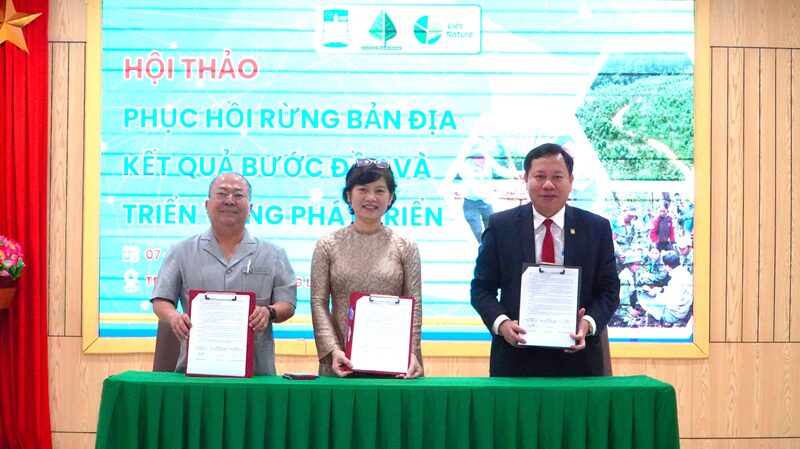
Memorandum of Understanding (MoU) between HUAF, TNV, and HUE-FOSDA
A highlight of the event was the signing ceremony of a Memorandum of Understanding (MoU) between HUAF, TNV, and HUE-FOSDA. The agreement establishes a strategic partnership to promote sustainable forestry, low-emission land use, and circular forestry development. The collaboration will focus on restoring multi-species native forests—particularly tropical rainforests through the rainforestation approach—while strengthening research, education, long-term ecological monitoring, the development of young scientific talent, and institutional cooperation among the partner organizations.
Through the workshop and the signing of the Memorandum of Understanding, the participating organizations reaffirmed their commitment to strengthening scientific research, technology transfer, and the development of effective forest restoration models, thereby contributing to biodiversity conservation, ecological restoration, environmental protection, and the advancement of a sustainable green economy in Vietnam.
Scenes from the Workshop:
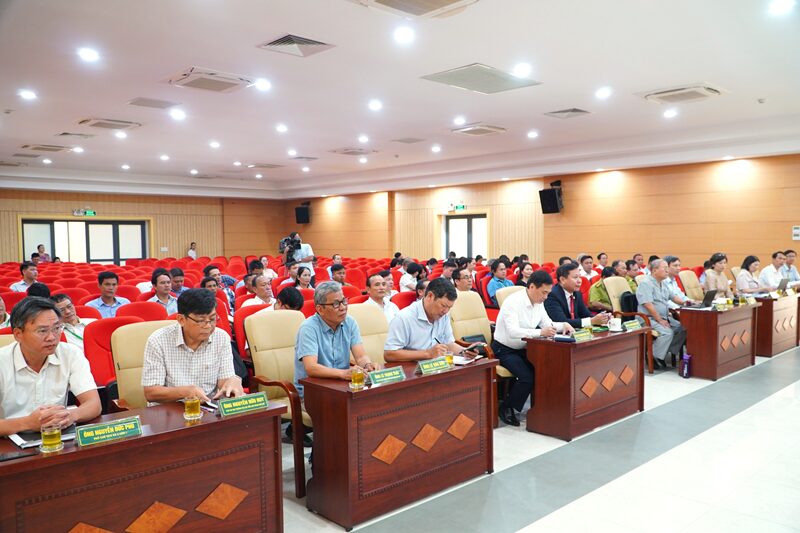
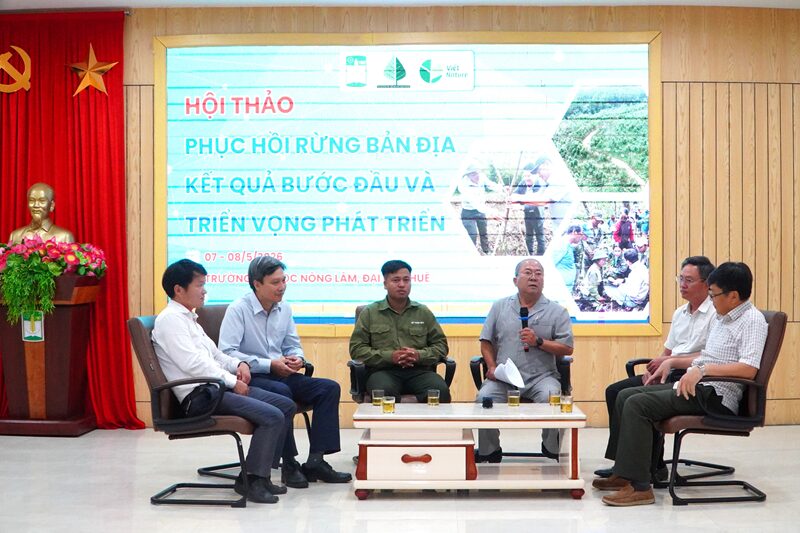
Policy roundtable discussion at the workshop
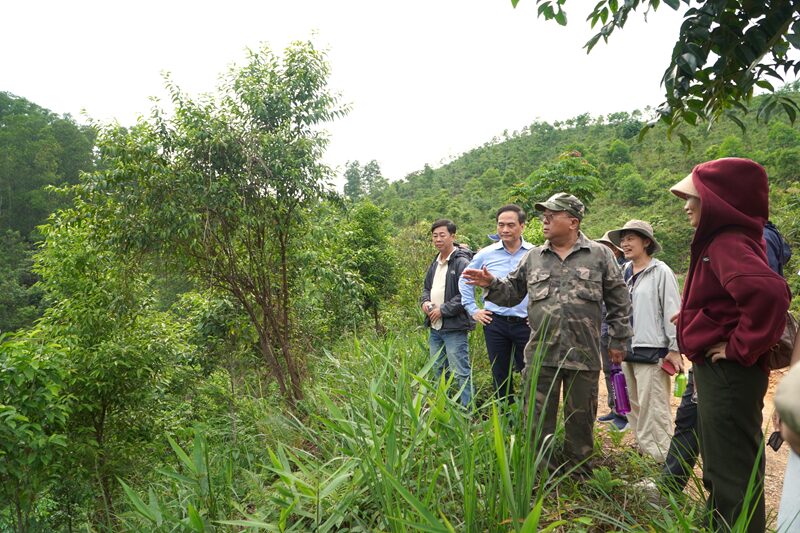
Workshop participants on a field visit
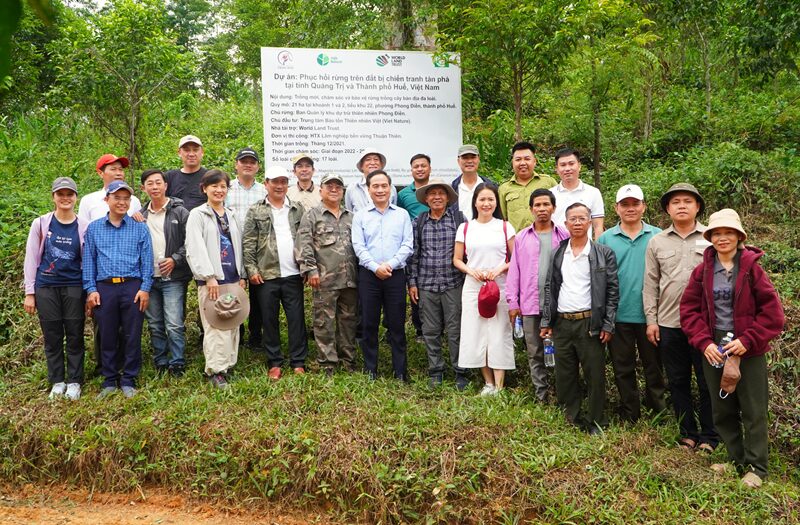 Workshop participants on a field visit
Newer articles
Older articles
HUAF tries its best to become as the prestigious university. Additionally, HUAF always makes great efforts in training to provide localities and enterprises with qualified human resources. It is highly appreciated as a good center in science and technology to contribute the development of socio- economics to the whole country in integration tendency.
- Online144
- Today993
- This month1,007
- Total18,850,593