 University of Agriculture and Forestry, Hue University
University of Agriculture and Forestry, Hue University
University of Agriculture and Forestry, Hue University
Knowledge Exchange and Strengthened Collaboration on Sustainable Biofertilizer Development under the S-BIOFERT Project
With the aim of promoting sustainable agricultural practices through the development and application of biofertilizers as a practical alternative to chemical fertilizers in vegetable production, on August 4, 2026, the University of Agriculture and Forestry, Hue University (HUAF), organized a knowledge and experience exchange program on the development of sustainable biofertilizers as alternatives to chemical fertilizers in vegetable production.
The program was held within the framework of the S-BIOFERT Project – “Development of Sustainable Biofertilizers as Alternatives to Chemical Fertilizers for Sustainable Vegetable Production by Farmers in Lao PDR, Viet Nam, Cambodia, Thailand, and Myanmar.” The project commenced on April 23, 2026, and will run for 36 months, ending on April 23, 2029. It is funded by the Mekong–Korea Cooperation Fund (MKCF).
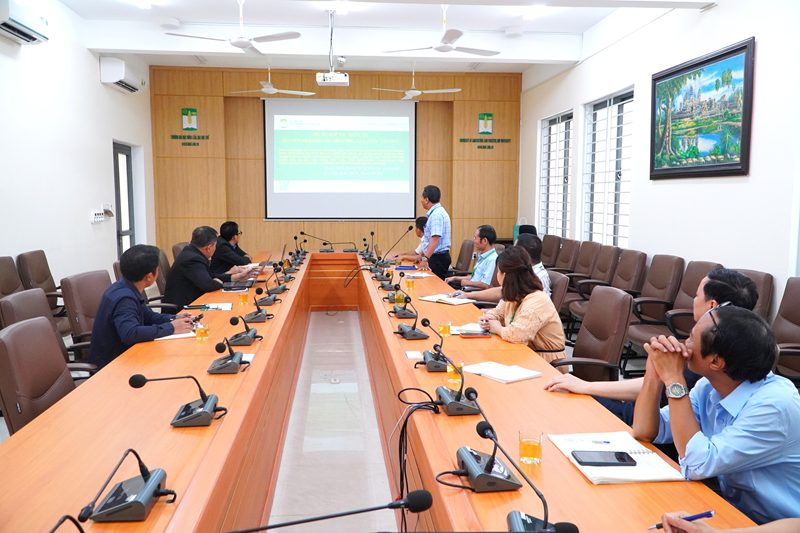
Overview of the knowledge exchange session
Participants from Champasak University, Lao PDR, included Mr. Sisomphone, S-BIOFERT Project Manager, and Mr. Hatsadong Chanthanousone, Assistant S-BIOFERT Project Manager. Representing HUAF were Assoc. Prof. Dr. Pham Huu Ty, Vice Rector; Assoc. Prof. Dr. Nguyen Van Duc, Head of the Department of Academic Affairs and Educational Quality Assurance and Project Coordinator; members of the S-BIOFERT Project Management Board; and members of the S-BIOFERT research team at HUAF.
Speaking at the program, Assoc. Prof. Dr. Pham Huu Ty, Vice Rector of HUAF, emphasized that the S-BIOFERT Project provides an important opportunity to strengthen collaboration among universities and partner institutions across the Mekong region, contributing to the research, development, and application of sustainable biofertilizer solutions. The project will also facilitate professional exchange among scientists, lecturers, and technical staff, enabling them to share expertise and experience and gradually develop application models suited to the agricultural conditions of different localities.
Speaking at the program, Assoc. Prof. Dr. Pham Huu Ty, Vice Rector of HUAF, emphasized that the S-BIOFERT Project provides an important opportunity to strengthen collaboration among universities and partner institutions across the Mekong region, contributing to the research, development, and application of sustainable biofertilizer solutions. The project will also facilitate professional exchange among scientists, lecturers, and technical staff, enabling them to share expertise and experience and gradually develop application models suited to the agricultural conditions of different localities.
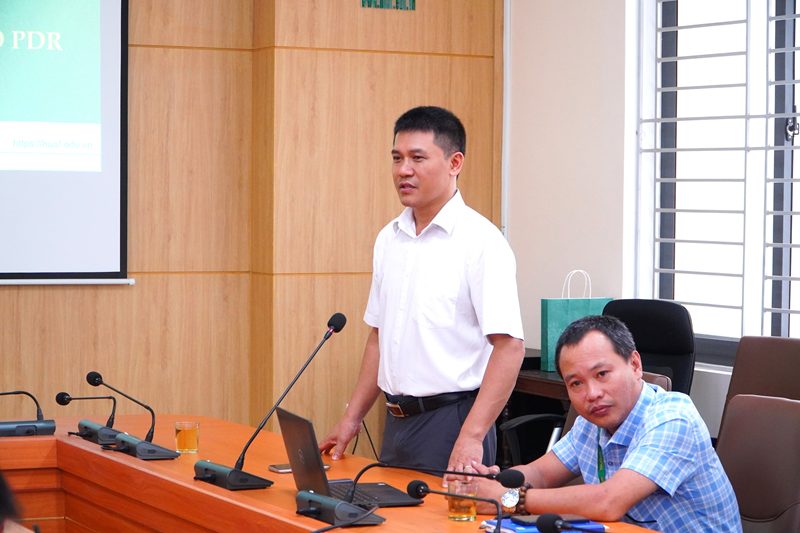
Assoc. Prof. Dr. Pham Huu Ty, Vice Rector of HUAF, speaking at the program
During the program, participants discussed the objectives, key activities, implementation plan, and roadmap of the S-BIOFERT Project for the 2026–2029 period. Discussions also covered research methodologies, coordination mechanisms among project partners, plans for field surveys and data collection, and assessments of current fertilizer-use practices in vegetable production in the project areas. These activities represent important initial steps in establishing a scientific and practical foundation for research, experimentation, and technology transfer in subsequent stages of the project.
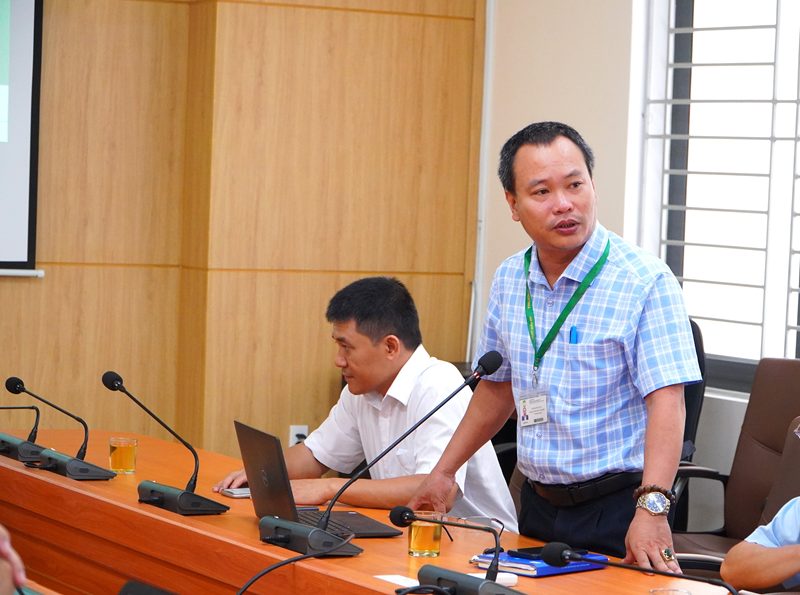
Assoc. Prof. Dr. Nguyen Van Duc, Head of the Department of Academic Affairs and Educational Quality Assurance and Project Coordinator, speaking at the program
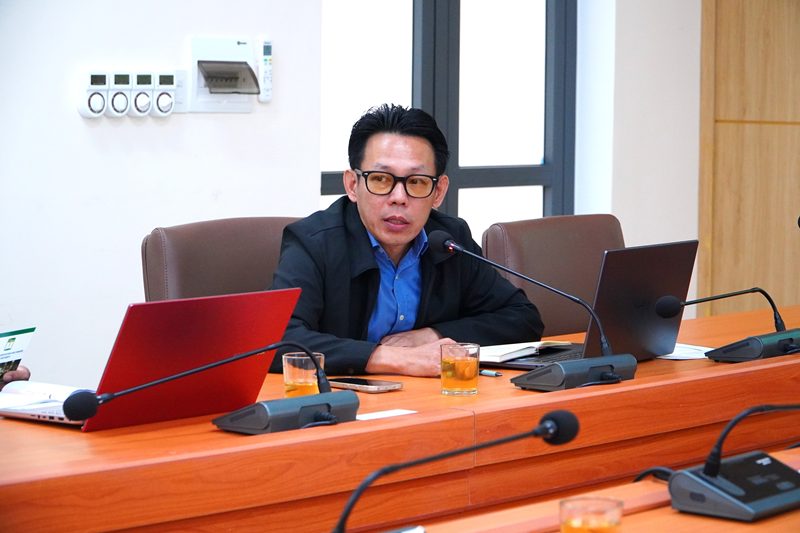
Mr. Sisomphone, S-BIOFERT Project Manager at Champasak University, Lao PDR, speaking at the program
In particular, based on the results of a survey of soil and land characteristics in Phong Dien Ward, Hue City, project members discussed and analyzed the local natural conditions, soil characteristics, and current farming practices in order to identify appropriate research solutions. The information collected will provide a basis for developing experimental models and evaluating the effectiveness of biofertilizers under real-world production conditions, with the goal of improving the yield and quality of vegetables while reducing environmental impacts.
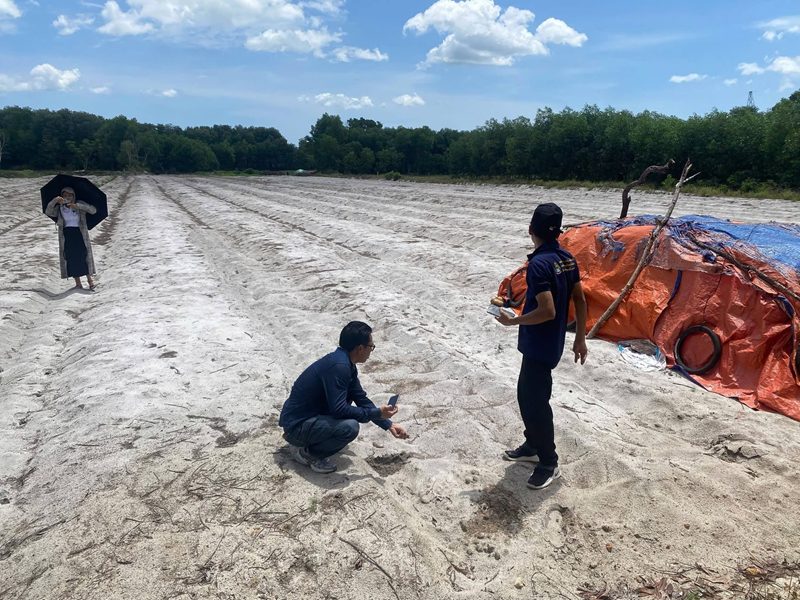
Field survey
Through the program, the partner institutions agreed to further strengthen coordination and leverage their respective strengths throughout the project implementation process. They will also maintain academic exchanges, share research findings and practical experience, and work together to ensure the progress, quality, and effectiveness of the S-BIOFERT Project. Over its 36-month implementation period, the project is expected to contribute to the wider application of biofertilizers in vegetable production across participating countries, supporting the development of green, safe, and sustainable agriculture.
The knowledge exchange program marked an important initial activity in the implementation of the S-BIOFERT Project at HUAF, laying the foundation for upcoming research, experimentation, training, and technology transfer activities. Through the project, HUAF continues to affirm its role as a bridge for international cooperation in sustainable agriculture, contributing to the application of biofertilizer solutions, improved vegetable production efficiency, environmental protection, and the development of green and circular agriculture across the Mekong region.
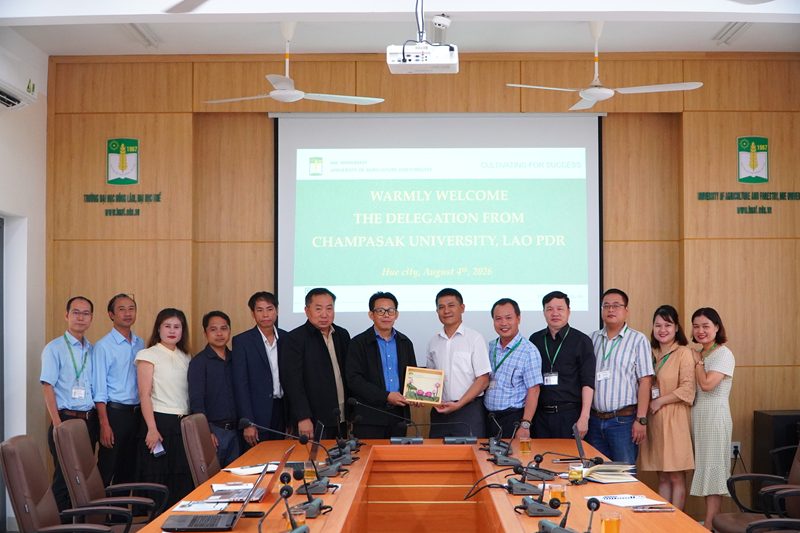
Group photo
Key: application of, agriculture and, university of, on august, with the, forestry hue, university huaf, 2026 the, the development, aim of, promoting sustainable, agricultural practices, through the, development and, biofertilizers as, practical alternative, to chemical, fertilizers in, vegetable production, knowledge and, experience exchange
Newer articles
Older articles
HUAF tries its best to become as the prestigious university. Additionally, HUAF always makes great efforts in training to provide localities and enterprises with qualified human resources. It is highly appreciated as a good center in science and technology to contribute the development of socio- economics to the whole country in integration tendency.
- Online172
- Today499
- This month513
- Total18,850,099